ML Training for Oceanic Research
Product Design Lead
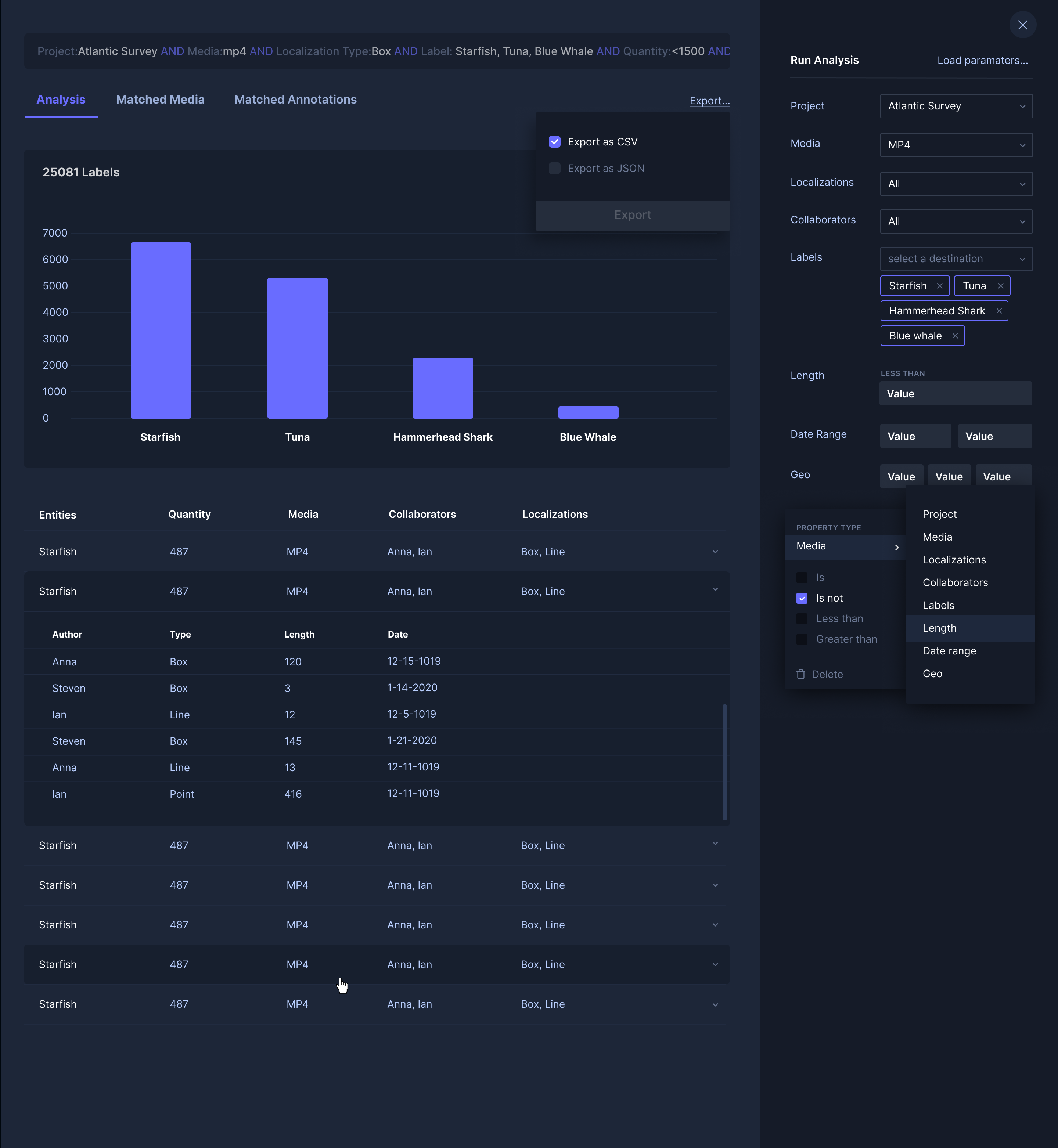
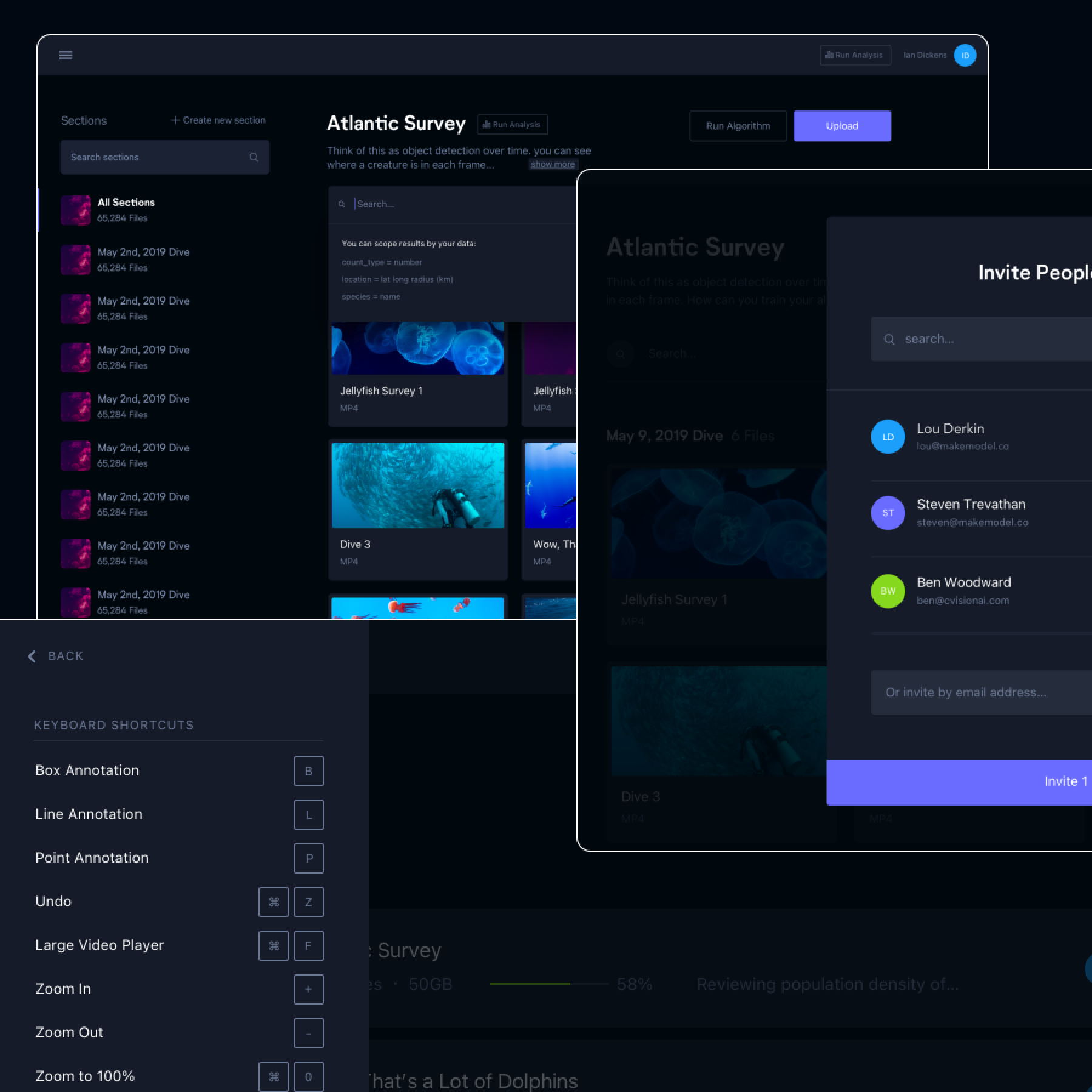
CVision's Tator is an AI video annotation solution that enhances the speed, scale and accuracy of marine life tracking. I directed two distinct but interrelated projects: redesigning the core annotation and data organization process, and designing the first data explorer experience. Together, these enabled marine biologists and researchers to efficiently transform vast amounts of video into actionable insights, directly in the browser.
I interviewed marine researchers, lab assistants, and existing customers to understand their workflow and pain points. Some institutions maintain video archives spanning three decades or more, creating an urgent need for intelligent processing of vast oceanic datasets.
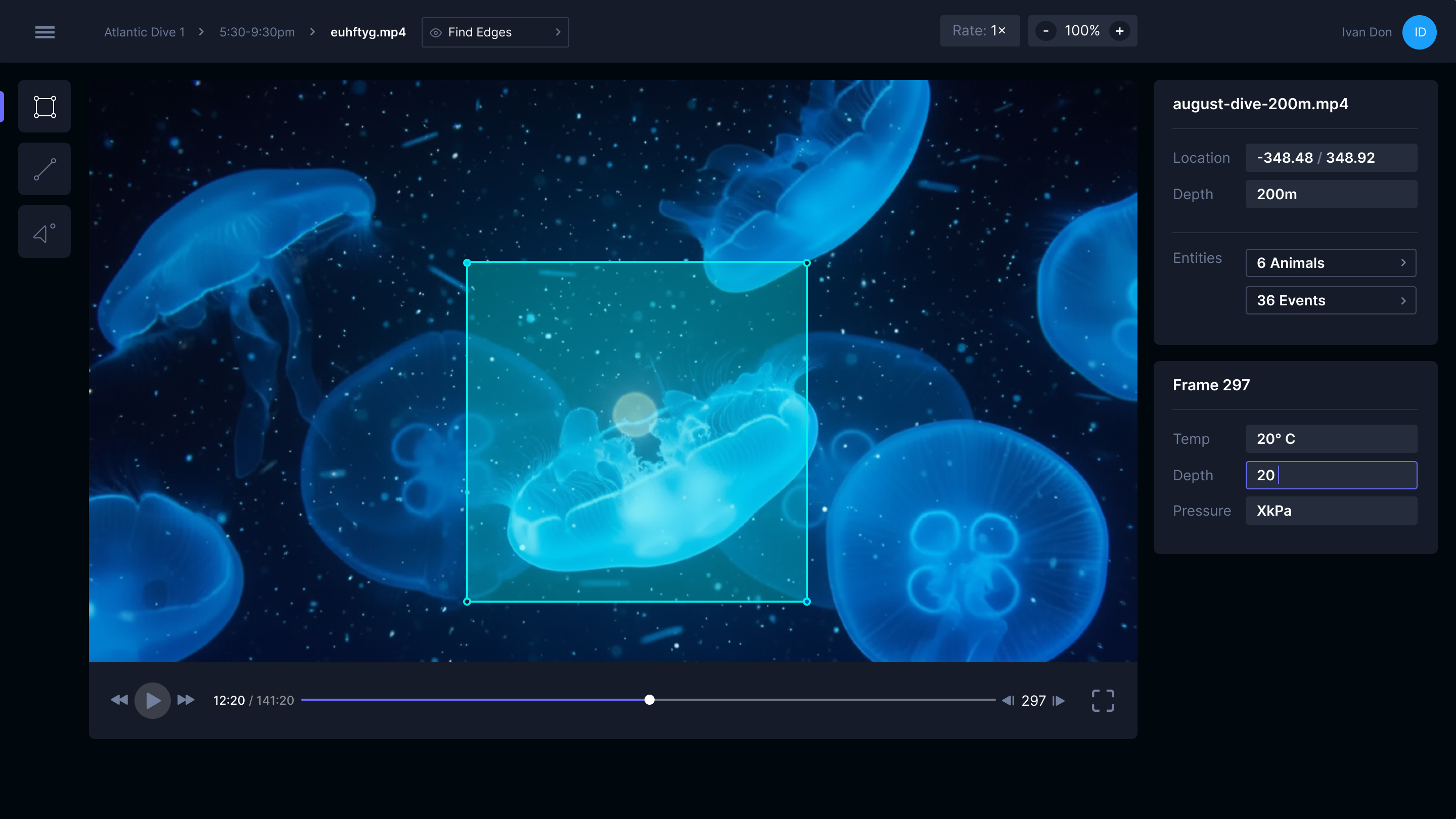
The existing tools split interrelated data across multiple interfaces, forcing researchers to toggle between screens without visibility into what they were changing, how extensively those changes would affect their work, or which algorithms were running and their performance.
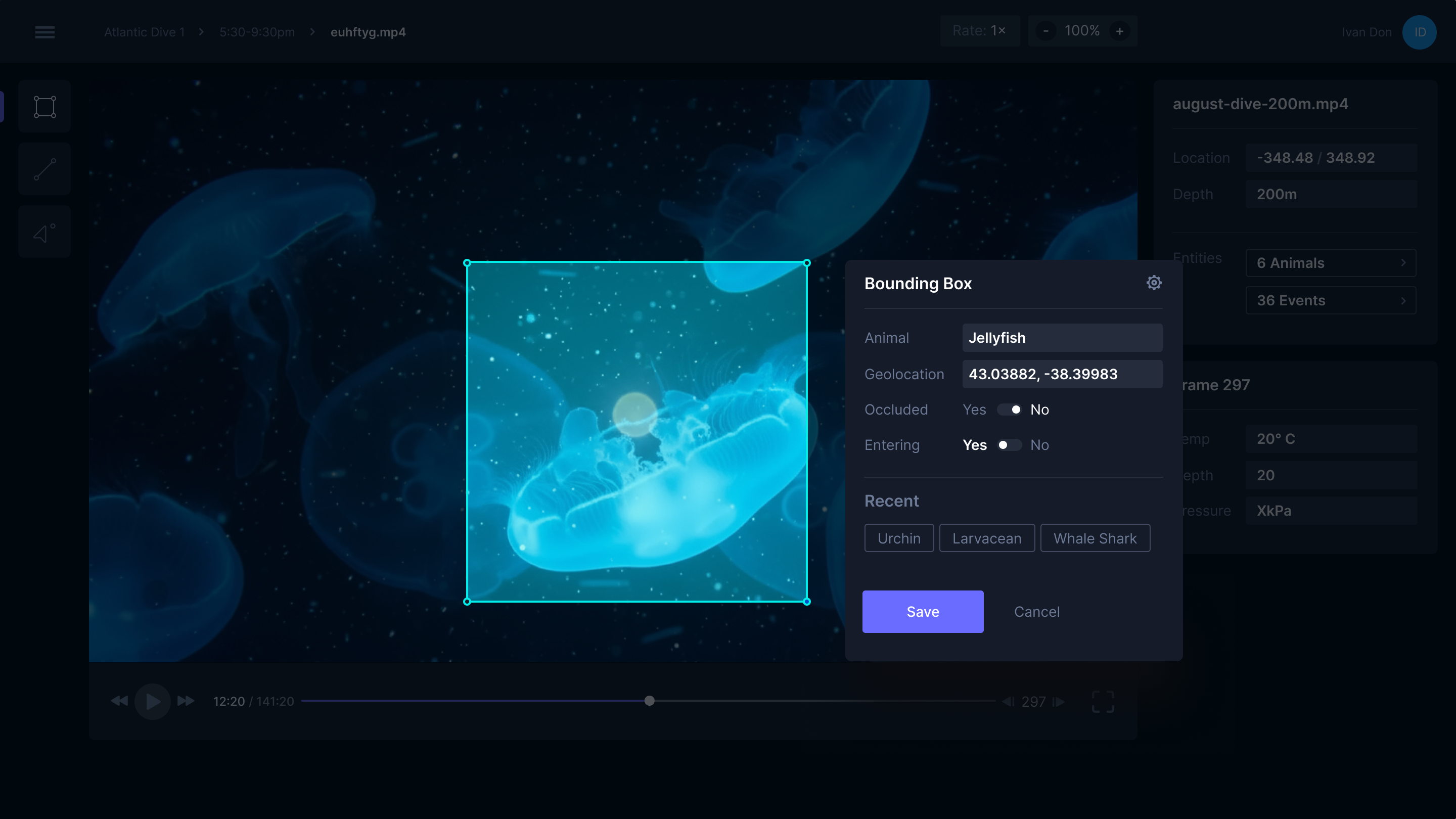
The redesigned annotation workflow placed impact awareness front and center, drawing inspiration from modern video editing tools to create an intuitive interface. Researchers could now see how their edits would cascade through their dataset before committing changes. Paired with an infinitely expandable interface for custom data types and formats, the solution eliminated the friction of fragmented tooling.
The impact extended beyond the initial redesign—Monterey Bay Aquarium Research Institute (MBARI) adopted Tator to help iterate on algorithms powering underwater remotely operated vehicles (ROVs) to study larvaceans, including their role in spreading microplastics into the food chain and in climate change. This would also lead to a multi-institution collaboration lead by MBARI to publish an open database explorer called FathomNet.